Humidity is the driving force behind leather embossing. The right level of moisture ensures that leather will be more easily embossed and that it will maintain the integrity of the design. Specifically, vegetable-tanned leather is best embossed when it is damp, not dripping, but still contains a good amount of moisture throughout the hide, allowing it to be more pliable. However, if there’s not enough moisture, embossing the leather will leave a weakened impression that crumbles easily and doesn’t last long.
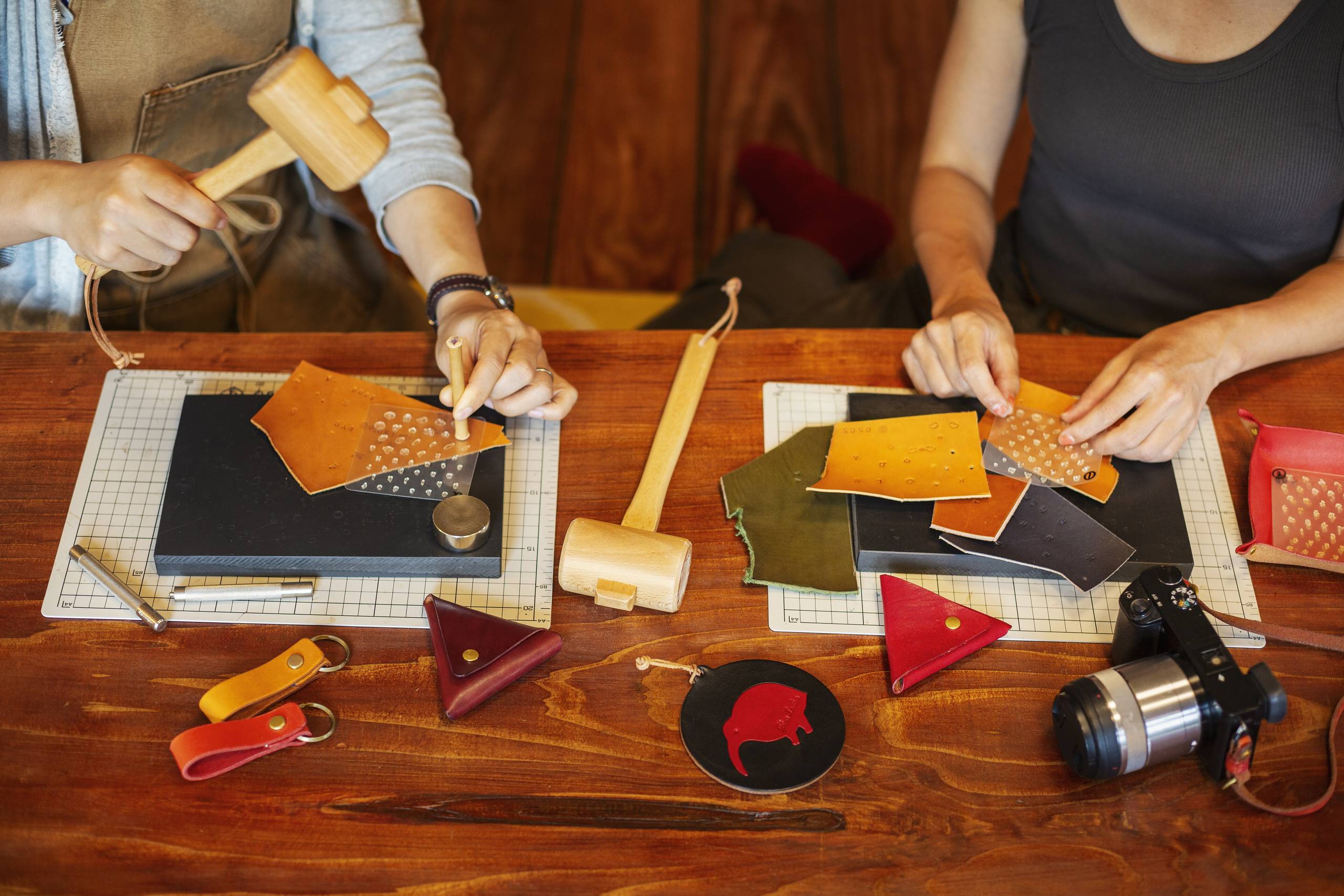
The amount and angle of pressure will dictate how high and defined the impression will be. To keep the impressions consistent for larger pieces, a consistent mallet stroke and an emphasis on smooth striking rather than forceful pounding is important. This helps to prevent “ringing” which is a gash caused by striking the tool at an angle. You may be surprised at how often this happens and also how often a soft tapping can yield more defined outlines than a pounding whack. There is also the ability to add different levels of depth to the piece by striking harder for raised details and softer for recessed details, for instance. The beauty of this process is that the more you work with it, the more it becomes muscle memory and you can focus on the art rather than the act.
The relationship between moisture and pressure becomes particularly apparent when the impression is being stamped, because it is important to press during a small time frame to get good results. The leather hardens quickly once it starts to dry, so the stamping needs to be done shortly after the surface has been dampened (often within a narrow window of minutes). This constraint can force one to work in the moment, which can be frustrating, but it is actually a chance to meditate on what you are doing. Some people also use a small spray bottle to add a touch more moisture to the edges or areas that are being resistant. This gives more time, and helps to get more uniform results on larger stamps or if the piece needs a lot of impressions.
A third variable is heat, which comes into play when trying to achieve something more complex, like hot stamping or foil printing. A warm tool will result in better releases from the stamp and foil adhesion, but will also dry faster and will require more time pressure. The right balance of heat and moisture can produce elevated, nearly three-dimensional textures with a shine that catches the eye. This aspect of the work can be a good lesson in patience, since even a slight difference in heat can have a big impact, and the leather worker must pay close attention to what the leather is telling them. The incorporation of heat opens the door for many possibilities beyond simple impression.
Once you get the hang of how water, pressure, and sometimes heat work, it’s no longer a mechanical exercise. Every time you do it right, you get a sense that observing and being patient make a big difference. As you become more comfortable, it’s less about the strict procedures and more about a conversation with the leather. That way you will not only be doing better work but have a deeper appreciation for the history and rules of the craft and open yourself up for more innovations. And in the end, it feels pretty great when you have something embossed that looks nice and good, and when you know you did it with thought and care.